Why Dampproofing Contractors Need Pollution Liability
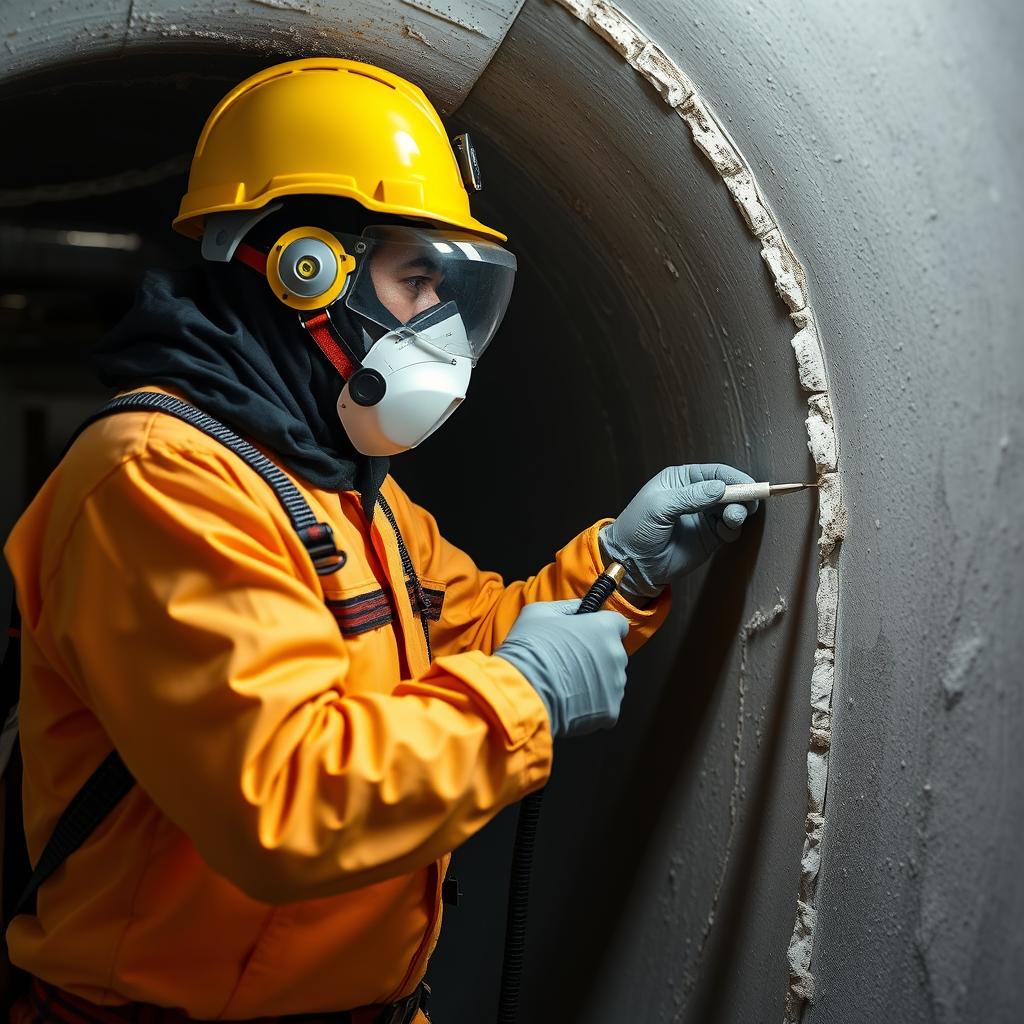
Most dampproofing and waterproofing contractors assume their general liability policy covers everything that happens on a job site. It doesn't. Hidden in the fine print of virtually every standard GL policy is a pollution exclusion — a clause that removes coverage for bodily injury and property damage arising from the discharge, dispersal, or seepage of a "pollutant."
And that word "pollutant" is defined broadly enough to include most of the chemical products used in professional dampproofing and waterproofing work.
What the Pollution Exclusion Actually Says
The standard ISO pollution exclusion (CG 21 49 or similar) removes coverage for:
Bodily injury or property damage arising out of the actual, alleged or threatened discharge, dispersal, seepage, migration, release or escape of pollutants...
Pollutants are defined as "any solid, liquid, gaseous or thermal irritant or contaminant, including smoke, vapor, soot, fumes, acids, alkalis, chemicals, and waste."
That definition catches virtually everything in a dampproofing contractor's chemical toolkit.
Which Waterproofing Products Trigger the Exclusion
Solvent-based bituminous membranes. Asphalt-based and coal-tar-modified waterproofing membranes are among the most common products in exterior dampproofing. These products contain petroleum solvents — typically naphtha, mineral spirits, or aromatic hydrocarbons — that evaporate during application. Those vapors are both health hazards and "pollutants" under most GL policy definitions.
Coal tar pitch. Coal tar is a historic and still-used waterproofing material, particularly in commercial and industrial applications. It contains polycyclic aromatic hydrocarbons (PAHs) — classified as probable human carcinogens. A worker or neighboring occupant who claims respiratory illness or skin exposure from coal tar pitch products will find the GL carrier invoking the pollution exclusion.
Polyurethane membrane solvents. Two-component polyurethane waterproofing membranes — widely used in below-grade and plaza deck waterproofing — contain isocyanates and solvents that off-gas during mixing and application. Isocyanate sensitization is a recognized occupational hazard and can result in claims from workers or building occupants in poorly ventilated areas.
VOC-containing surface sealers and primers. Many surface preparation products, bonding primers, and waterproofing sealers used in conjunction with membrane application contain volatile organic compounds (VOCs) at levels that can cause respiratory irritation and trigger the pollution exclusion.
Crystalline waterproofing admixtures. While crystalline waterproofing products (like those based on calcium silicate chemistry) are generally lower-hazard than solvent-based systems, some contain alkaline crystalline compounds that can be irritating. Claims involving these products are less common but not unheard of.
What Contractor Pollution Liability (CPL) Covers
Contractor Pollution Liability fills the gap left by the GL pollution exclusion. A well-structured CPL policy covers:
Bodily injury from chemical exposure. If a homeowner, a building occupant, or a worker claims illness or injury from exposure to solvent vapors, coal tar, or other chemicals during waterproofing application, your CPL policy covers defense costs, medical claims, and settlement or judgment amounts.
Property damage from chemical releases. If solvent-based products spill or migrate into a customer's soil or adjacent property, or if chemical vapors permeate a structure and cause damage, CPL covers the resulting third-party property damage claim.
Cleanup and remediation costs. If a chemical spill at a job site requires environmental cleanup — soil excavation, groundwater testing, or remediation — CPL covers those costs. Standard GL explicitly excludes them.
Defense costs for regulatory proceedings. If a chemical release triggers a regulatory investigation or an enforcement action, CPL covers your defense in those proceedings in addition to civil claims.
The Crawl Space Exposure
Crawl space waterproofing and encapsulation work creates specific pollution exposures that make CPL especially important. When you're working in a confined, poorly-ventilated crawl space applying solvent-based vapor barriers or membrane products, chemical vapor concentrations build rapidly.
If a homeowner re-enters the structure shortly after a crawl space encapsulation and claims chemical exposure symptoms — headaches, nausea, dizziness, respiratory irritation — that's a pollution claim against your GL policy that the pollution exclusion will deny. Your CPL policy covers it.
The confined space nature of crawl work also creates employee exposure claims. Workers' comp covers injuries to your crew, but if a homeowner or neighbor claims secondary exposure from vapors that migrated through the structure, CPL is the policy that responds.
How CPL Coordinates With GL
The most important thing to understand about contractor pollution liability is how it coordinates with your GL policy. You need both — and they need to work together without gaps.
The ideal structure is a GL policy that explicitly acknowledges the CPL policy and a CPL policy with matching definitions so that a claim arising from chemical exposure clearly falls under CPL rather than creating a dispute between the two carriers about which policy covers what.
Some specialty markets offer a combined GL + CPL product on a single policy form. This eliminates the gap and simplifies claims handling. For contractors whose primary exposure is chemical in nature, this structure often provides the cleanest protection.
What CPL Typically Costs
For a small to mid-sized dampproofing contractor using standard solvent-based products, CPL premiums typically range from a few hundred to a few thousand dollars per year depending on annual revenue, crew size, and chemical products used. That cost needs to be weighed against the cost of a single uncovered pollution claim — which can easily reach $50,000 to $200,000+ when defense costs, cleanup, and damages are combined.
No dampproofing contractor using solvent-based membranes, coal tar, or VOC-emitting waterproofing products should be operating without contractor pollution liability. If your current GL program doesn't include it, call us at 844-967-5247 and we'll add it.
Need this coverage for your waterproofing business?
Get a real quote in about 15 minutes — we shop A-rated specialty contractor markets.